
Potato Masher vs Mortar and Pestle: Which Result Do You Need?
Compare working motion, batch size, texture control, loading and cleaning before choosing.
In This Guide
What is the short answer?
Choose a potato masher for repeated pressing across a larger portion of cooked food. Choose a mortar and pestle for smaller batches where crushing, grinding, or mixing against a bowl is the intended motion. Neither format replaces the other for every ingredient.
How does texture control differ?
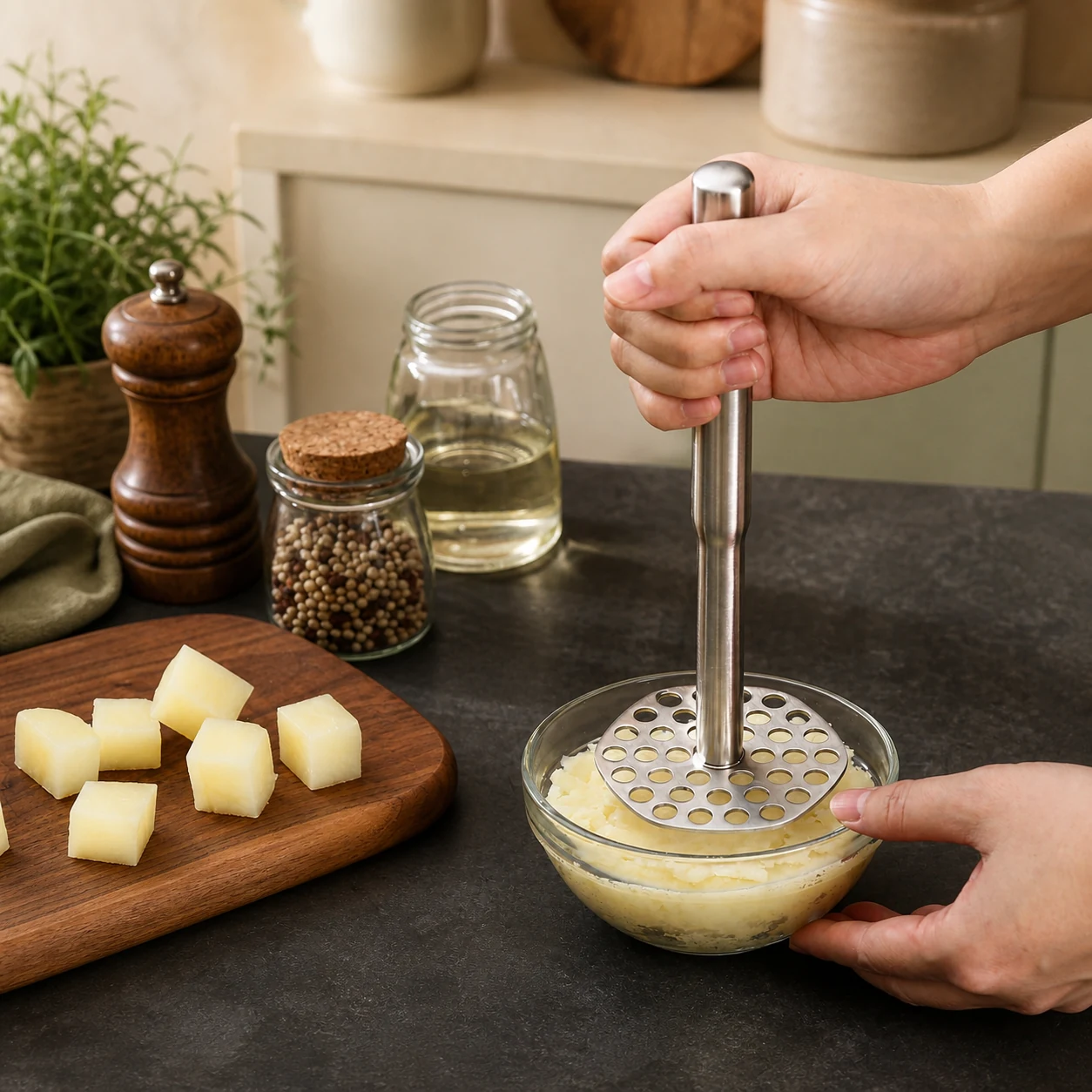
A masher repeats a downward press through its working surface. A mortar and pestle lets you change pressure, direction, and duration inside the bowl. Match the mechanism to the recipe and to the texture you actually want.
What facts matter before ordering?
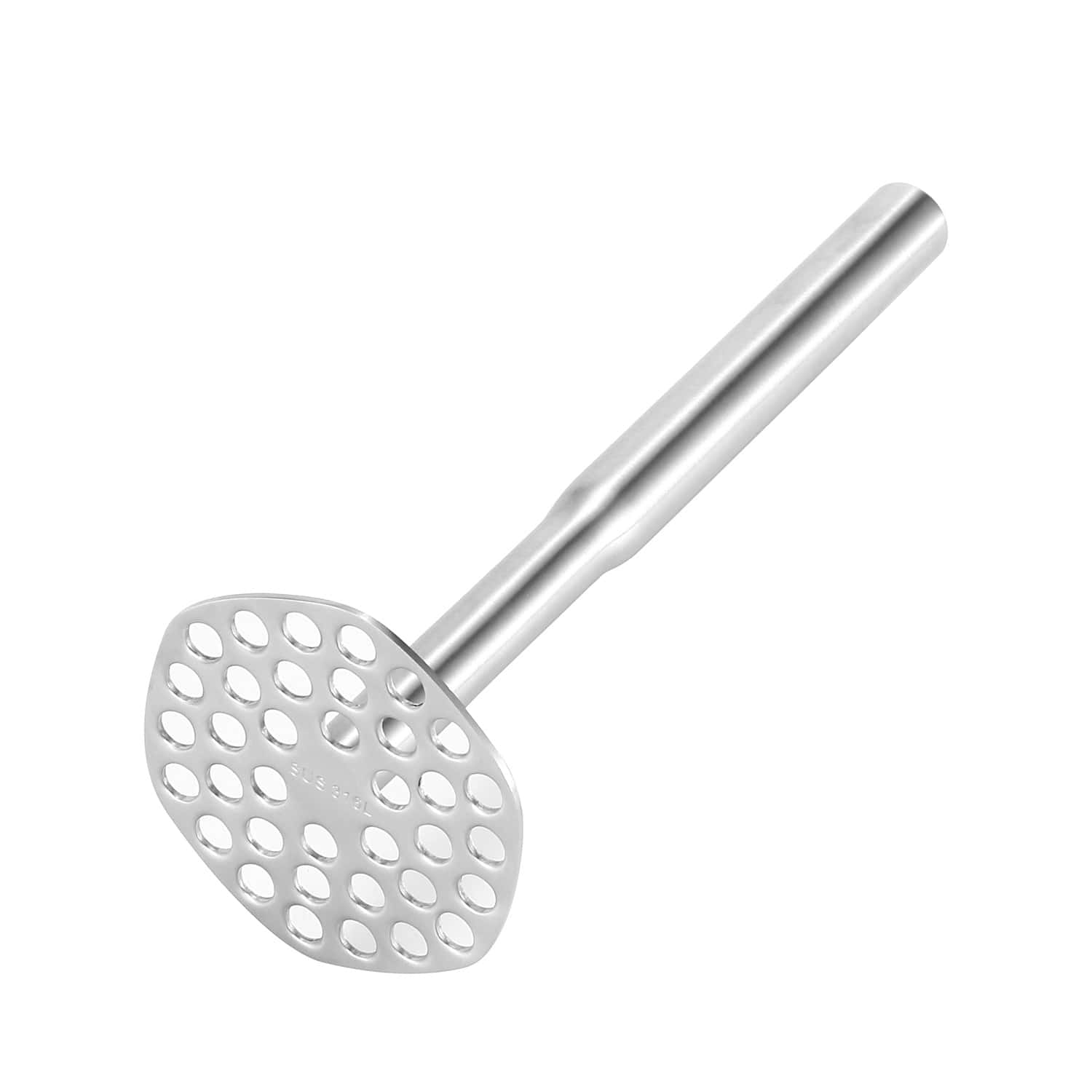
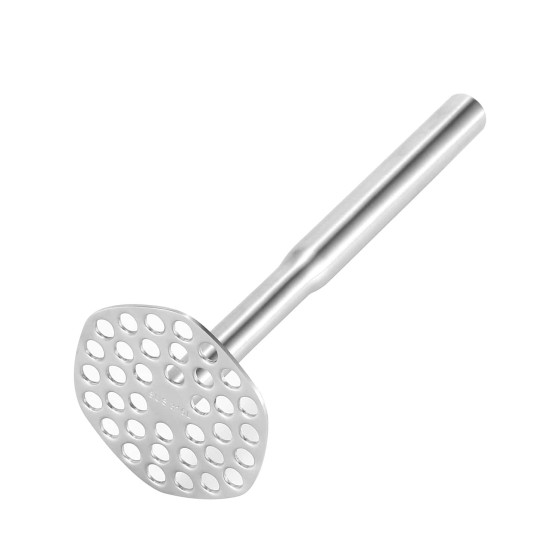
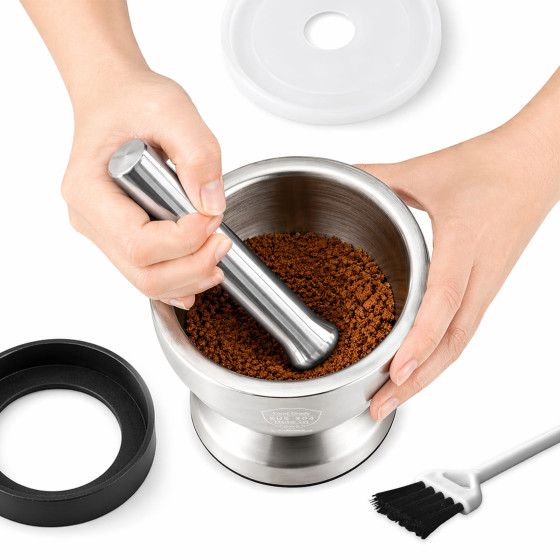
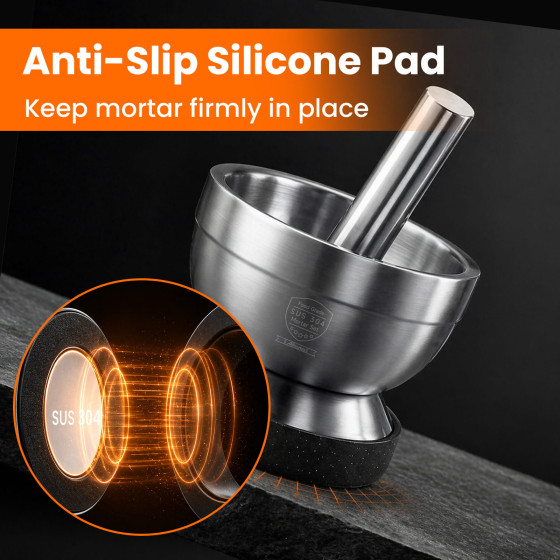
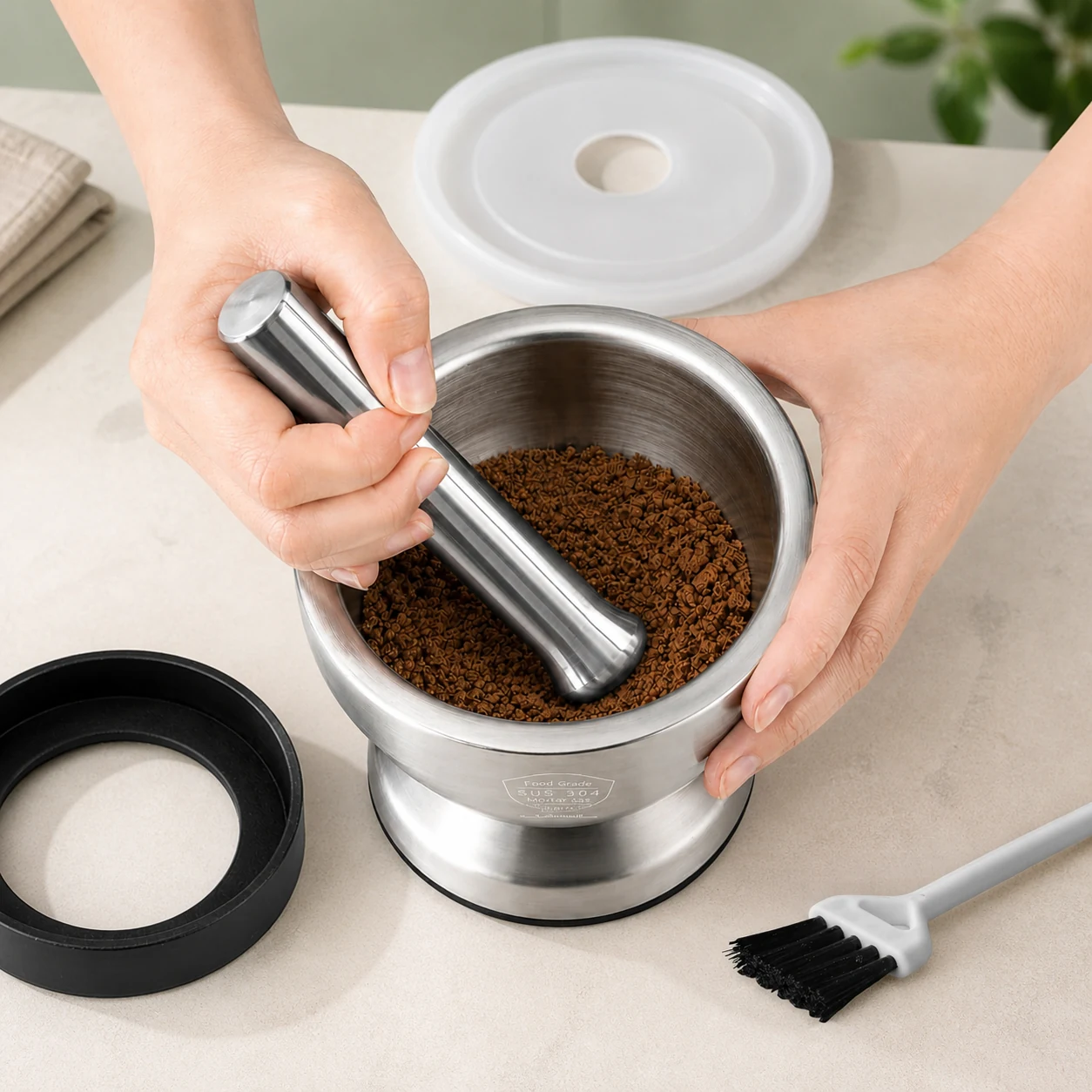
Compare dimensions, capacity, material by component, handle position, working surface, stability, lid or accessory details, and the cleaning path. The current WP-3797 masher has a 316L stainless-steel mashing head and a 304 stainless-steel handle. The WP-4300 mortar and pestle are recorded as 304 stainless steel, with a lid, cleaning brush and silicone anti-slip pad; confirm the full specifications on their product pages.
Which current model suits my ingredients and batch?
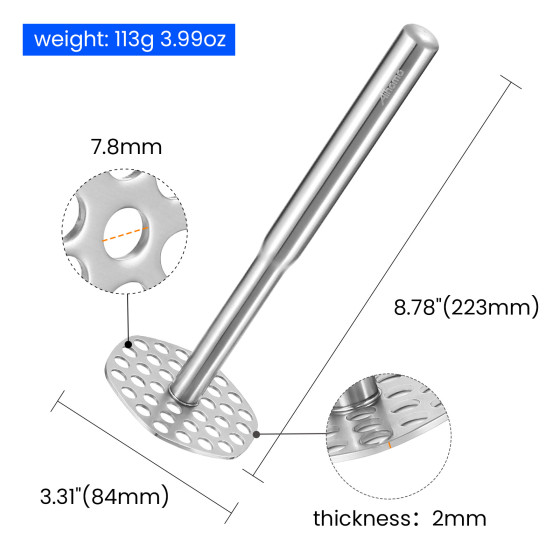
WP-3797 is a hand masher with 7.8 mm plate holes and a 22.1 cm handle. Its recorded uses include potatoes, avocado, cooked beans and soft fruit. It is not a potato ricer, and the final texture depends on the ingredient and technique.
WP-4300 is intended for small batches of garlic, nuts, herbs, spices and seeds. The mortar is approximately 10.0 cm across the rim and 9.1 cm high, but its internal capacity is not yet confirmed. Do not infer a serving count or volume from the outside dimensions, or choose it as a replacement for a larger-batch masher without checking your task.
Use the associated product pages to compare current price, availability, included parts and care instructions. A shared stainless-steel material label does not make the two formats interchangeable.
Which is easier to clean?
Ease of cleaning depends on the complete shape, not the product name. Inspect perforations, edges, bowl transitions, contact surfaces, and any removable component, then follow the product-specific care directions.
Related Tools
These are products from our store. Check the brand, model, current availability, and care instructions on each product page.
Related Content
 Tool Guide
Pressing Tools: Match the Mechanism to the Result
A clearer way to compare ricers, mashers, presses, and other manual pressing tools.
Check Details
Tool Guide
Pressing Tools: Match the Mechanism to the Result
A clearer way to compare ricers, mashers, presses, and other manual pressing tools.
Check Details
 Material Guide
304, 316 and Other Stainless Steels for Kitchen Tools: A UK Guide
A wider food-contact guide to the stainless-steel numbers British shoppers see, the practical quality differences, and what still has to be checked on the finished tool.
Check Details
Care Guide
How to Clean and Care for Stainless-Steel Kitchen Tools
A UK-focused routine for keeping everyday stainless-steel prep tools clean, dry and ready for the next meal.
Check Details
Material Guide
304, 316 and Other Stainless Steels for Kitchen Tools: A UK Guide
A wider food-contact guide to the stainless-steel numbers British shoppers see, the practical quality differences, and what still has to be checked on the finished tool.
Check Details
Care Guide
How to Clean and Care for Stainless-Steel Kitchen Tools
A UK-focused routine for keeping everyday stainless-steel prep tools clean, dry and ready for the next meal.
Check Details