
304, 316 and Other Stainless Steels for Kitchen Tools: A UK Guide
A wider food-contact guide to the stainless-steel numbers British shoppers see, the practical quality differences, and what still has to be checked on the finished tool.
In This Guide
The useful short answer
For a non-bladed kitchen tool, correctly specified 304 stainless steel is already a dependable, high-quality mainstream material—not a second-rate option. It combines good corrosion resistance, durability, formability and cleanability for a broad range of everyday kitchen work. Type 316 is a further step up in corrosion resistance and can be worthwhile where salt, chlorides, prolonged wet contact or more demanding cleaning conditions are expected.
That is a meaningful quality and durability difference, but the numbers are alloy designations rather than legal “food-safety scores”. A well-made 304 tool can be the right choice for ordinary use, while a poorly made item is not rescued by printing 316 on the listing.
What British shoppers usually see: 18/0, 18/8 and 18/10
The familiar fractions describe nominal chromium and nickel content, not a complete product test. In UK cutlery language, 18/8 commonly refers to the 304 family: roughly 18% chromium and 8% nickel. “18/10” is also commonly used for 304-type cutlery; the British Stainless Steel Association cautions that it should not automatically be read as a different, superior grade.
“18/0” usually points to ferritic 430 stainless steel, with chromium but no intentional nickel addition. It is magnetic and widely used in suitable cutlery and appliance applications. It can be perfectly legitimate for its intended job, although its general resistance to localised corrosion is below that of 304.
A practical map of the main kitchen grades
430 / 18/0: a cost-effective, magnetic stainless used in cutlery and kitchen equipment. It generally offers less corrosion margin than 304, so finish, prompt cleaning and drying matter. 201: a recognised 200-series austenitic grade in which manganese and nitrogen replace some nickel. Properly specified 201 can perform near 304 in some conditions, but the wider 200-series market also includes low-chromium, ultra-low-nickel variants with markedly poorer corrosion performance. “200 series” alone is therefore not enough detail.
304 / 18/8: the established all-round choice and the quality baseline ZELIND favours for many non-bladed food-preparation tools. 316 / 316L: contains molybdenum, which improves resistance to pitting and crevice corrosion in chloride-bearing conditions. It is the natural upgrade when 304 does not provide enough corrosion margin.
410 and 420: martensitic stainless steels chosen because they can be heat-treated for strength and a hard cutting edge. They are familiar in blades and cutting tools and should not be judged by the same priorities as a mortar or masher. If you have encountered “403”, it is also a martensitic engineering grade; for everyday UK kitchenware, 430 is the much more likely number behind an 18/0 label.
Why 304 is a strong kitchen choice
Chromium helps stainless steel maintain a thin passive surface layer, while nickel supports the stable austenitic structure and helps the surface recover when disturbed. This gives 304 a useful balance of corrosion resistance, toughness, manufacture and long service life. It is one of the two stainless families most commonly used for food-contact equipment alongside 316.
For utensils that are cleaned after use, are not left in concentrated salt or aggressive chemicals, and can be dried properly, 304 is not merely “acceptable”: it is a well-established and reassuring material specification.
Where 316 and 316L go further
The molybdenum in 316 makes it harder for chloride ions to break down the passive layer locally. That extra reserve is valuable around salty mixtures, coastal exposure, repeated wet service and some demanding food-processing conditions. It explains why 316 is often positioned above 304 on corrosion performance and material cost.
The “L” in 316L means low carbon. It is particularly useful for limiting sensitisation around welding; it does not mean “luxury”, nor is it a separate food-contact certificate. Even 316 still needs the right cleaning, drying and chemical limits.
Food-contact safety is a whole-product question
In Great Britain, the governing principle applies to the finished material or article under normal or foreseeable use: it must not transfer constituents to food in quantities that endanger health, unacceptably change the food, or impair its taste, smell or other sensory characteristics. Manufacturing must also follow good practice, and product information must not mislead.
The alloy is only one part of that assessment. Material identity and traceability, surface finishing and passivation, sound welds and joints, accessible geometry, other metals or coatings, residues from manufacture, intended foods, contact time, temperature and care instructions all affect the complete product.
What can make any stainless tool perform badly?
Salt or chloride cleaner left on the surface, prolonged damp storage, food trapped in crevices, rough or iron-contaminated finishing, scratches, unsuitable bleach products and failure to rinse or dry can all undermine corrosion performance. “Stainless” means stain resisting, not stain proof.
Check the manufacturer’s directions before using a dishwasher, disinfectant, abrasive or acidic cleaner. Wash away residues, inspect joins and working surfaces, and dry the complete tool before storage.
How these materials appear in current ZELIND listings
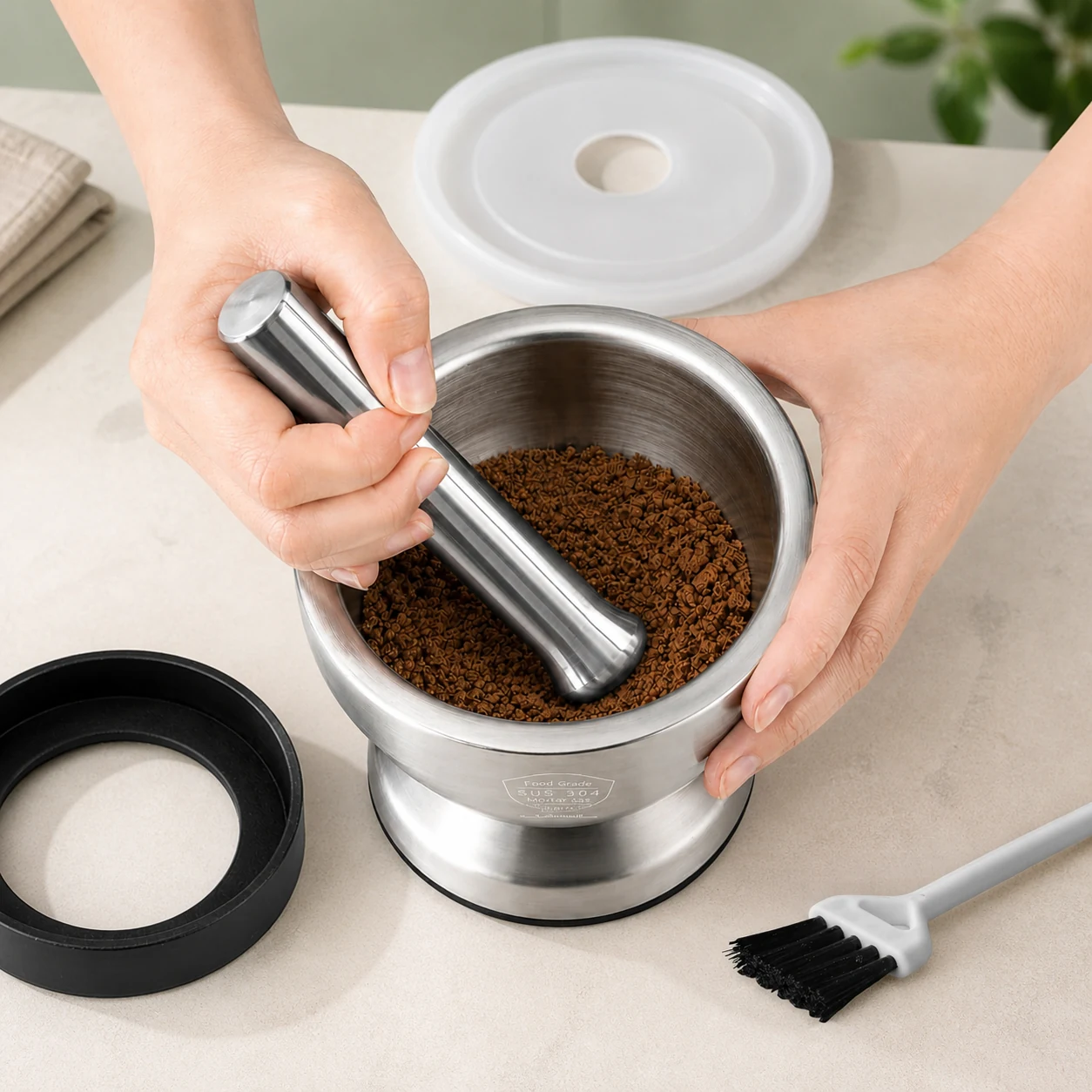
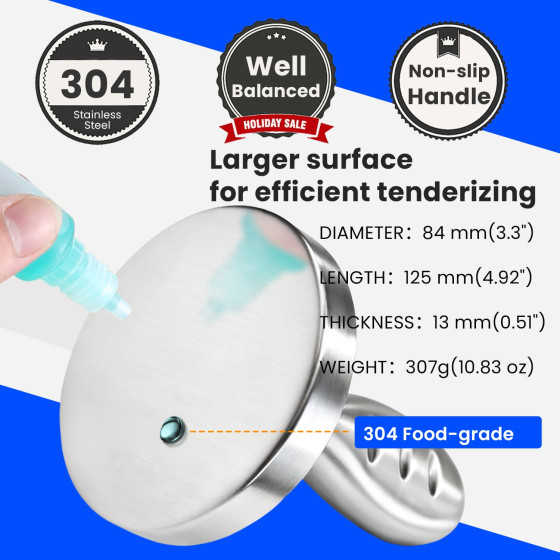
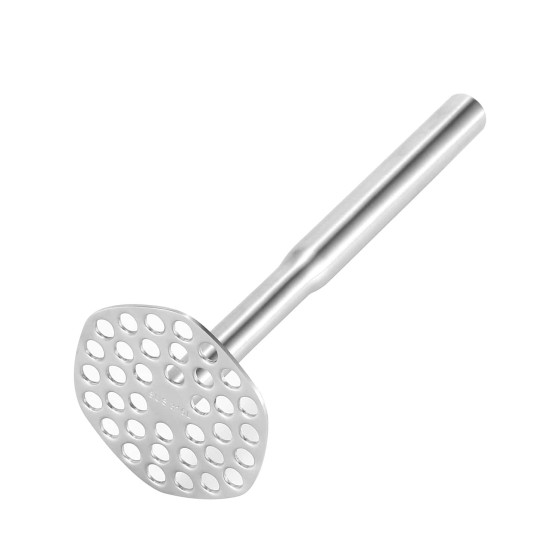
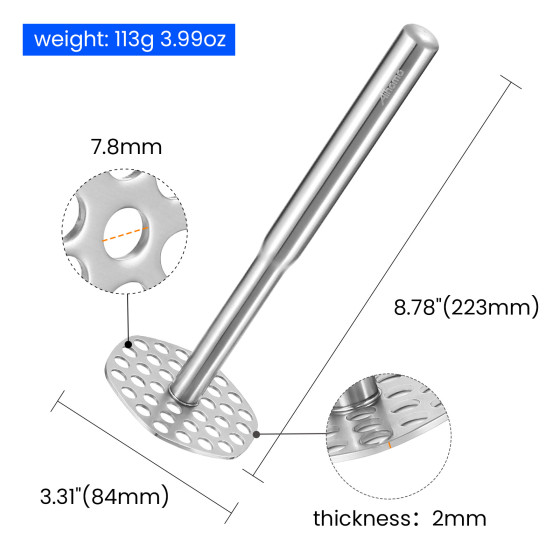
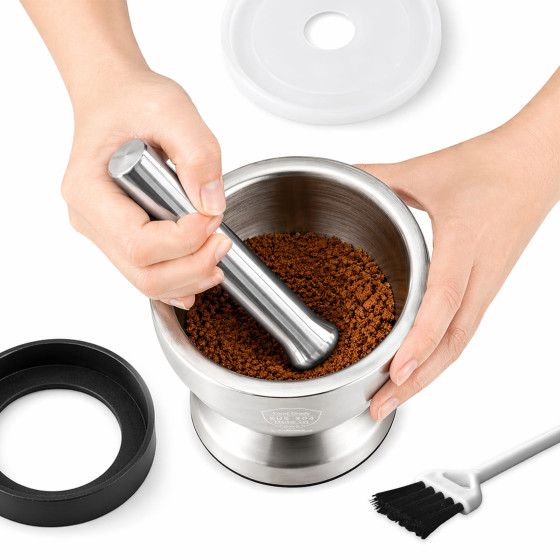
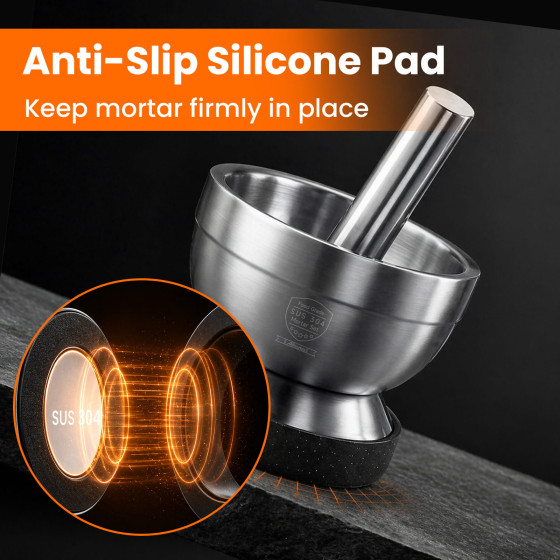
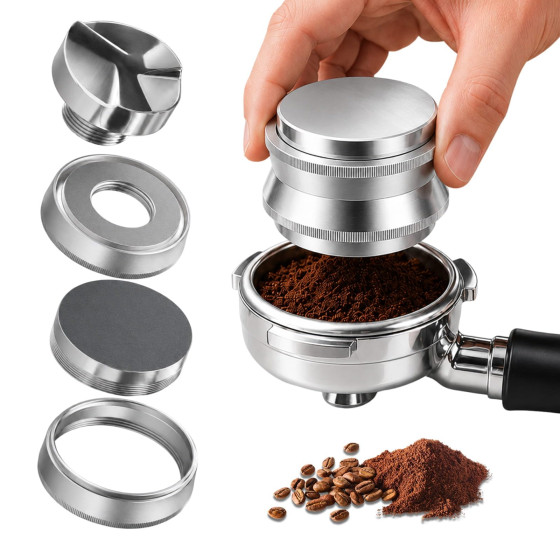
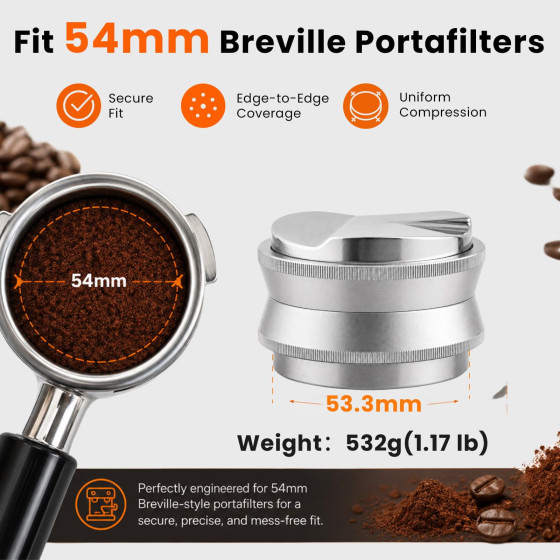
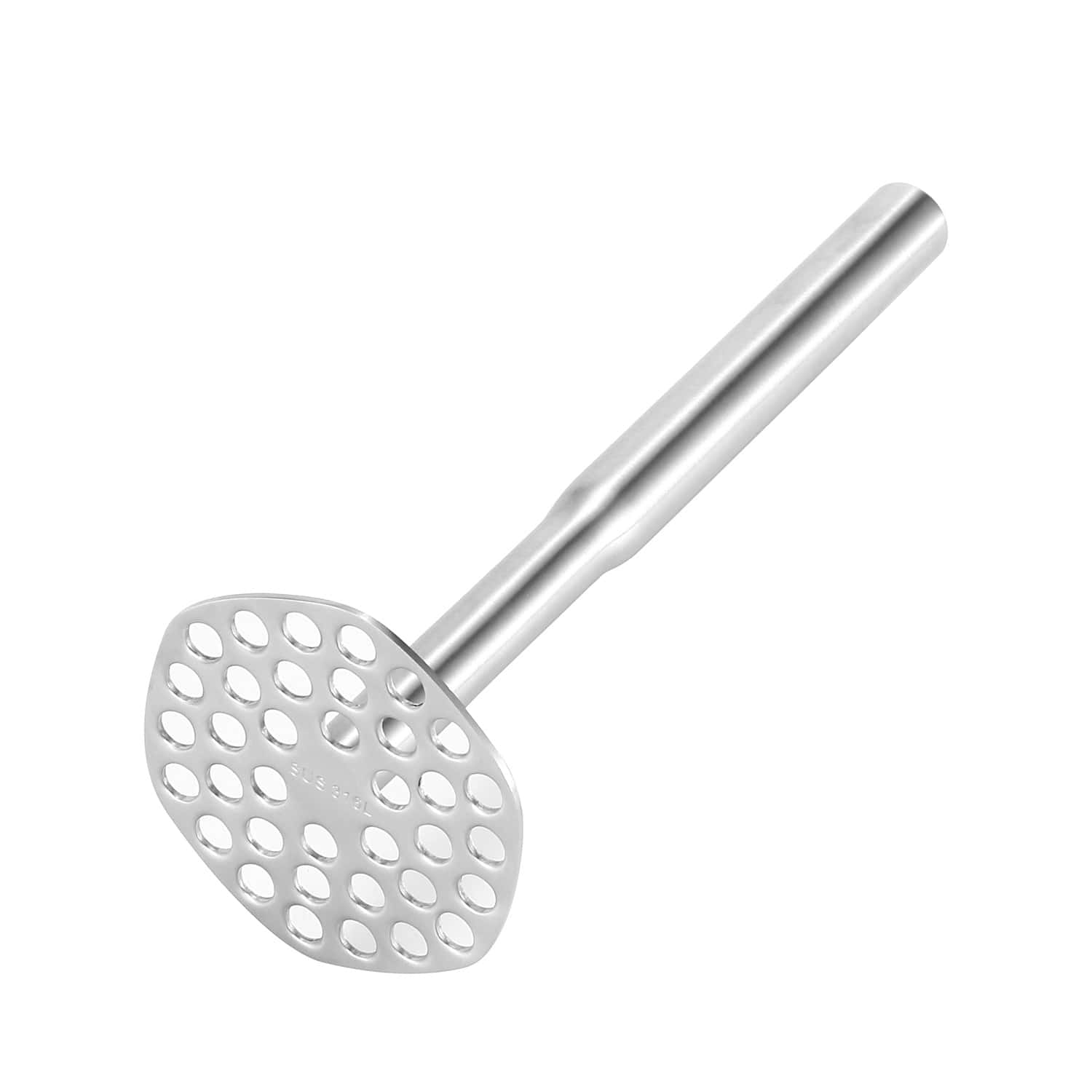
Where supplier records support the detail, ZELIND states the material by component. The current WP-3797 potato masher is listed with a 316L stainless-steel mashing head and 304 stainless-steel handle. The WP-4300 mortar and pestle is listed as 304 stainless steel. On B0H2Q5PB3V, the distributor head and flat tamp base are recorded as 304 stainless steel, while the main body is machined aluminium.
Across suitable non-bladed preparation tools, using verified 304 as the mainstream specification—and 316L where additional corrosion performance is useful—is a deliberate material choice. The current product page remains the source for each component, intended use and care direction.
A sensible five-point buying check
Look for the exact grade and the component it describes; distinguish 18/0 or 430 from 18/8 or 304; treat an unspecified “stainless steel” claim as less informative; check the finish, joints and cleanability of the whole tool; and match the product to salt, acidity, temperature, contact time and cleaning conditions in your own kitchen.
Choose 304 with confidence for a well-made everyday tool. Choose 316 or 316L when its extra corrosion reserve answers a real exposure need. For blades, expect a different grade designed to hold an edge rather than assuming that every lower number is automatically lower quality.
Sources and further reading
- UK legislation: Regulation (EC) No 1935/2004, Article 3
- BSSA: Cutlery grades 18/0, 18/8 and 18/10
- BSSA: Selecting stainless steel for food processing
- BSSA: How alloying changes corrosion resistance
- BSSA: 300-series and 200-series alternatives
- worldstainless: Martensitic stainless steels for cutting tools
- worldstainless: What the “L” grade suffix means
Related Tools
These are products from our store. Check the brand, model, current availability, and care instructions on each product page.
Related Content
Care Guide
How to Clean and Care for Stainless-Steel Kitchen Tools
A UK-focused routine for keeping everyday stainless-steel prep tools clean, dry and ready for the next meal.
Check Details
 admin/page.content_types.comparison
Potato Masher vs Mortar and Pestle: Which Result Do You Need?
Compare working motion, batch size, texture control, loading and cleaning before choosing.
Check Details
admin/page.content_types.comparison
Potato Masher vs Mortar and Pestle: Which Result Do You Need?
Compare working motion, batch size, texture control, loading and cleaning before choosing.
Check Details
 Care Guide
How to Clean, Inspect and Store Meat Tenderising Tools After Raw Meat
Separate the dirty tool, wash hands, clean every food-contact surface, inspect the structure, dry fully and store it safely.
Check Details
Care Guide
How to Clean, Inspect and Store Meat Tenderising Tools After Raw Meat
Separate the dirty tool, wash hands, clean every food-contact surface, inspect the structure, dry fully and store it safely.
Check Details